
Get the facts about Battle Ground schools
Get clear, sourced information about Battle Ground schools, district funding, enrollment, student outcomes, and the issues affecting our community.
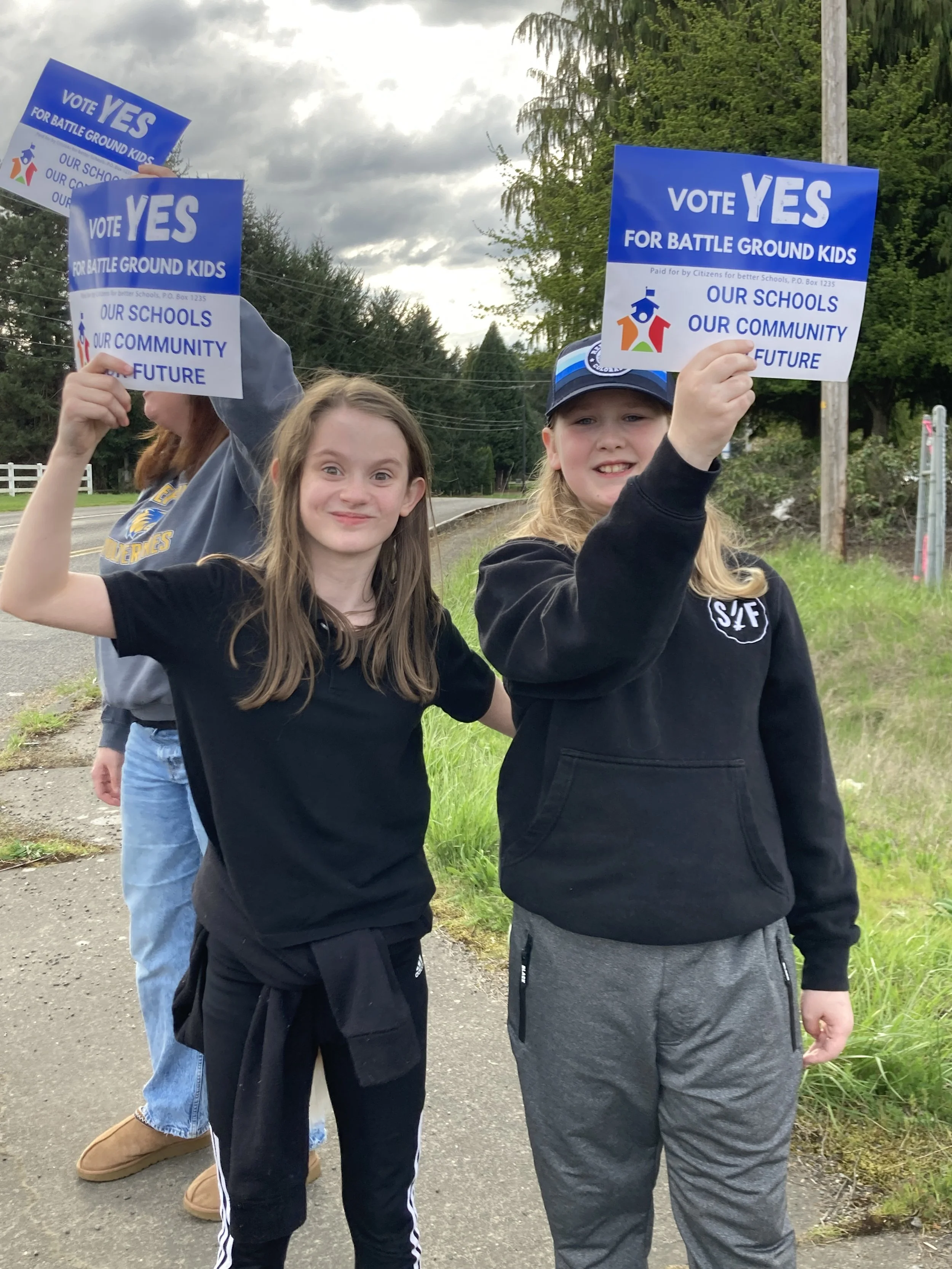
Why the Levy Matters
Proposition 11 helps protect classroom staffing, student support and essential school services from deeper cuts.
Protect Student Support
Levy dollars help support classroom staffing, academic assistance, student activities and services that help students stay engaged and successful.
Maintain Essential Services
Local funding helps pay for transportation, classroom materials, updated curriculum, technology, utilities, maintenance and other basic school operations.
Prevent Deeper Reductions
Proposition 11 would provide local resources to help avoid another significant round of reductions to programs and services beginning in the 2027–28 school year.
Where Local Levy Dollars Would Go
The levy invests in the people, programs and everyday essentials that keep Battle Ground schools operating and students supported.
Restore Reduced Programs & Services
Student emotional-learning support, additional activities and coaches, teacher training, and increased support for families, staff and students.
Employee Health Coverage
Mandatory employee health coverage not fully funded by the state for eligible employees.
Substitute Teachers & Staff
Coverage on days when a teacher or other staff member is sick or has taken a personal day.
Utilities & Energy
Water, power, waste management and other utilities for the district's 19 schools and other facilities.
Classroom & Operating Supplies
Classroom materials, office supplies, fuel, parts and other everyday items and services needed to operate schools.
Student Transportation
Repairing and eventually replacing older school buses and helping cover required benefits and pensions for transportation staff.
Updated Curriculum & Learning Materials
Current materials for math, science, social studies and English language arts, plus staff support for teachers implementing them.
School Maintenance & Repairs
Increased maintenance of school buildings and grounds, custodial operations and equipment repairs.
Insurance
Property, liability, equipment and other types of required district insurance.
Technology Support
Increased technology assistance, equipment and software for schools.
Communication & Financial Transparency
Increased communication about district finances and student outcomes.
How much would Proposition 11 cost property owners?
The district estimates the levy rate at $1.76 per $1,000 of assessed property value per year.
This is the district's estimated annual levy rate beginning with collections in 2027.
How much can the district collect?
Proposition 11 establishes a maximum voter-approved collection amount for each year.
Myth vs. Fact
There is a lot of information circulating about Proposition 11. Select a topic below to see the facts behind some of the most common claims.
District Spending Myth vs. Fact
District spending has increased by 36% since the 2019–20 school year.
District expenditures increased 27%, which is on par with inflation during the same period.
Why did expenditures increase?
Several factors contributed to increased district expenditures between 2019–20 and 2024–25.
Student Enrollment Myth vs. Fact
Battle Ground's enrollment is decreasing.
Enrollment is increasing.
What do the enrollment numbers show?
While Battle Ground Public Schools has fewer students than it did in 2019, enrollment has been increasing in recent years.
Student Test Scores Myth vs. Fact
More than half of all students are failing English, math and science standards.
More than 70% of students show at least foundational grade-level knowledge in English, and more than 60% do so in math and science.
What do these test score results mean?
The percentages below include students in levels 2, 3 and 4. Those levels indicate students demonstrated foundational grade-level knowledge or higher.